
Popular Products For Professional Chip And Seal Pavings
Choose from proven products designed to deliver consistent results in commercial and residential chip and seal pavement projects.
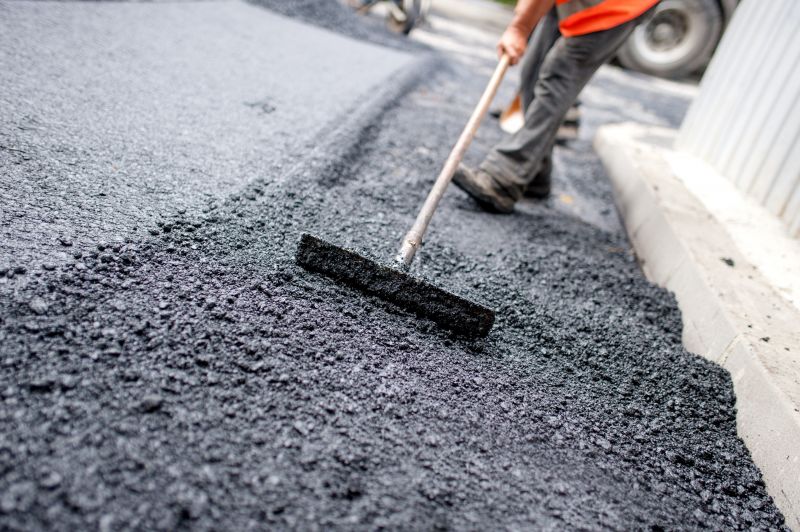 Products designed for chip and seal pavings encompass a diverse range of materials and tools essential for the proper installation and maintenance of this asphalt surface treatment. These products are formulated to enhance adhesion between the aggregate chips and the underlying binder layer, ensuring durability and longevity of the paved surface. Commonly used materials include specialized asphalt emulsions, aggregate chips of varying sizes, and tack coats that serve as bonding agents. Proper selection and application of these products can significantly impact the performance of the paving project.
Top Overall Option
Premium Asphalt Emulsion and Aggregate Kit
This comprehensive kit includes high-quality asphalt emulsion, a variety of aggregate chip sizes, and application accessories designed to facilitate consistent and effective chip and seal paving projects. Its balanced formulation aims to promote adhesion and durability without making absolute guarantees, allowing users to achieve reliable results based on proper application techniques.
Types of Products For Chip And Seal Pavings
Asphalt Emulsions
Various formulations designed to bond aggregate chips to the pavement surface, available in quick-setting or extended-release options.
Aggregate Chips
Different sizes and materials of crushed stones or gravel used to create the textured surface characteristic of chip and seal pavements.
Tack Coats
Bonding agents applied before aggregate placement to improve adhesion between layers.
Spreaders
Equipment used to evenly distribute aggregate chips across the prepared surface.
Sprayers
Tools designed for applying asphalt emulsions uniformly over the surface.
Rollers
Heavy-duty rollers used to press the aggregate into the emulsion, ensuring proper compaction.
Surface Testers
Instruments for measuring surface moisture and texture to ensure optimal application conditions.
Sealant Sprays
Protective coatings applied after paving to seal the surface and enhance longevity.
Bonding Agents
Additional adhesives that improve the cohesion between layers or repair patches.
Crack Fillers
Materials used to repair existing cracks before applying chip and seal treatments.
Primer Coats
Initial coatings that prepare the surface for subsequent layers.
Protective Barriers
Materials used to shield the surface during curing or from traffic during early stages.
Dust Control Products
Supplements that minimize dust during application, improving safety and cleanliness.
Heating Equipment
Tools used to warm emulsions or aggregate for better flow and adhesion.
Vibration Plates
Devices used to enhance compaction and embedment of aggregate into the binder.
Edge Restraints
Materials or devices used to define and protect pavement edges during application.
Popular Choices
Widely used for bonding aggregate chips, available in various formulations to suit different project needs.
Commonly selected for its durability and availability in multiple sizes for diverse applications.
Popular for its efficiency in distributing aggregate evenly over large areas.
Favored for their ability to apply emulsions uniformly, ensuring proper coverage.
Preferred for their ability to compact aggregate thoroughly, improving surface stability.
Essential for assessing surface conditions before application, helping to achieve optimal results.
Popular for sealing the surface after paving, providing a protective layer.
Commonly used for preparing existing surfaces prior to chip and seal application.
Often chosen to enhance adhesion between layers, especially on older or worn surfaces.
Frequently used to maintain pavement boundaries and prevent aggregate loss.
Popular for minimizing airborne dust during application and curing phases.
Used frequently to warm emulsions for improved flow and bonding.
Commonly employed to prepare the surface by removing debris and loose material.
Often used during application to ensure safety and proper work zone management.
Applied post-paving to extend surface life and resist weathering.
Popular for their role in achieving proper embedment of aggregate.
In addition to the primary materials, there are numerous accessories and equipment that facilitate efficient application. These include spreaders, rollers, and sprayers tailored for even distribution of asphalt emulsion and aggregate. Quality control products such as moisture meters and surface testers are also integral to achieving optimal results. When working with chip and seal pavings, it is crucial to consider the specific project requirements, including traffic load, climate conditions, and the desired lifespan of the surface.
Understanding the different types of products available can help in selecting the right combination for each project. For instance, some emulsions are designed for quick setting, while others offer extended workability. Aggregate chips vary in size, shape, and material, each suited for different paving scenarios. Proper preparation and application of these products can contribute to a smooth, durable surface that withstands traffic and weathering over time. Whether for residential driveways, parking lots, or roadway projects, having the right products on hand is key to successful chip and seal paving endeavors.
Key Buying Considerations
- Compatibility of products with existing pavement conditions and project specifications.
- Type and size of aggregate chips suitable for the intended surface texture and traffic load.
- Formulation and setting time of asphalt emulsions to match project timelines.
- Application equipment compatibility and ease of use for efficient work flow.
- Surface preparation requirements, including cleaning and moisture levels.
- Durability and adhesion properties of bonding agents and tack coats.
- Environmental conditions such as temperature and humidity that may affect application.
- Availability of replacement parts and maintenance support for application equipment.
- Safety features and handling instructions for chemical products.
- Cost-effectiveness considering the quality and longevity of materials used.
- Compatibility with existing pavement repair or reinforcement methods.
- Ease of transportation and storage of materials and equipment.
- Project size and scope to determine the appropriate volume and type of products.
- Regulatory compliance and quality standards adhered to by the products.
- User reviews and professional recommendations for specific product types.